




Full disclosure: growing up, my family car was once nearly sideswiped by a wrong-way driver. The terror of that memory flashed into mind when the news broke of an Iowa chief judge caught allegedly driving drunk on the wrong side of US 30. That's not your every-day traffic headline—and it's certainly not who we expect to see behind the wheel in such a scenario. Today, let's unpack this extraordinary case, the bizarre rescue, and what it says about justice on both sides of the bench.
A Night on US 30: The Incident, the Rescue, and a Bystander's Heroism
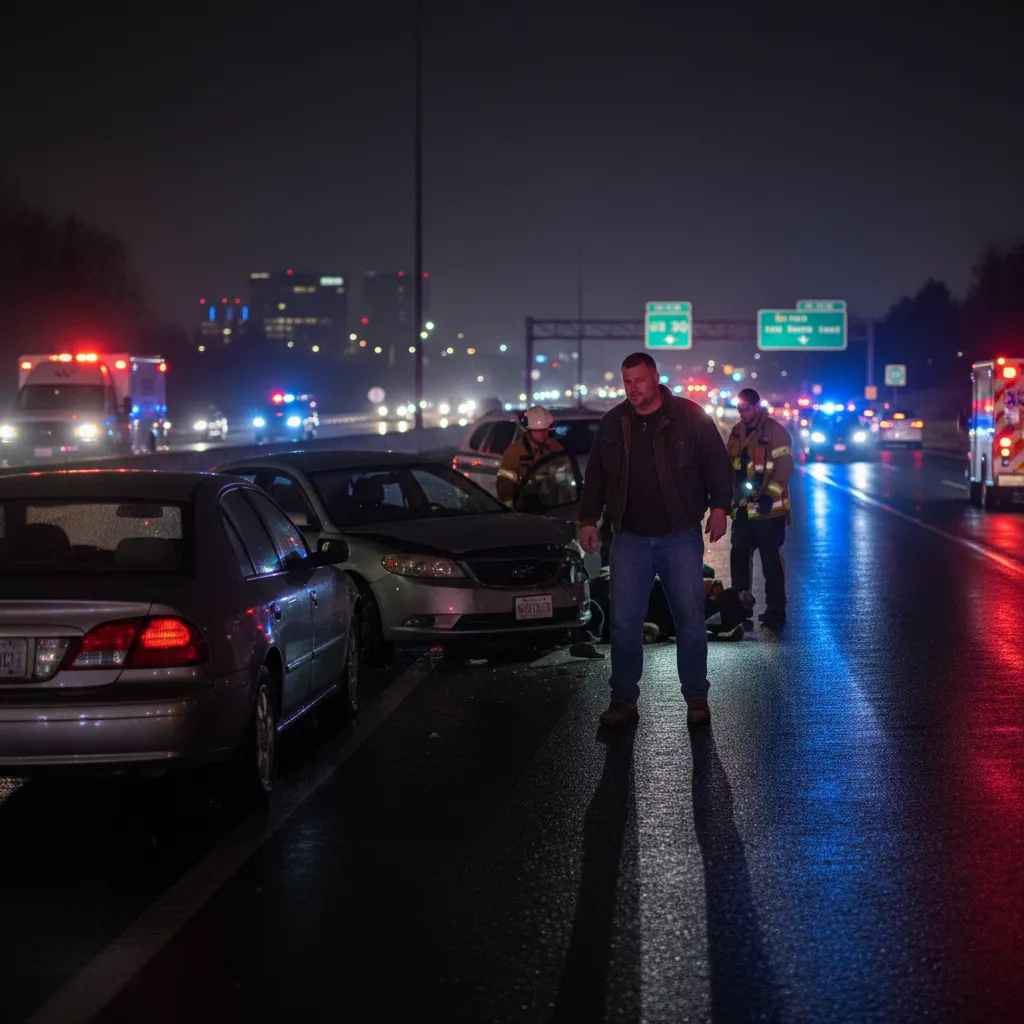
On a quiet night after 8:00 p.m., US Highway 30 in Boone County, Iowa, became the scene of a harrowing wrong way driving incident involving a prominent member of the judiciary. According to reports, Chief Judge Adria Kester, age 55, was behind the wheel of a Canyon Denali truck when motorists noticed something dangerously amiss: the vehicle was traveling eastbound in the westbound lanes, a perilous situation that could have ended in tragedy.
Multiple 911 calls flooded in as concerned drivers observed the truck moving slowly but steadily against traffic. Witnesses described the driver as being slumped over the steering wheel, apparently unconscious . The truck eventually veered into the highway median, continuing to roll even as the judge appeared unresponsive. This alarming scene underscored the gravity of the situation and the immediate threat to public safety.
The quick thinking and courage of a bystander proved pivotal during this Boone County judge wrong way driving incident. As the truck rolled in the median, one witness sprang into action. Unable to open the vehicle’s doors and with the driver still unresponsive, the witness made a split-second decision that would avert potential disaster. As detailed in the criminal complaint:
A witness had to climb in the back window to put the Canyon Denali truck in park and shut it off.
This act of witness intervention was nothing short of heroic. The bystander’s willingness to physically enter the moving vehicle, risking personal safety, directly prevented further harm. Their actions not only brought the vehicle to a stop but also allowed first responders to safely approach and address the situation. Thanks to this intervention, no injuries were reported—transforming what could have been a tragic headline into a story of quick action and community responsibility.
Following the incident, Judge Kester was arrested and charged with operating while intoxicated (OWI), a first offense. She was released from the Boone County jail the following morning, according to court records. The details of the judge arrest highlight the seriousness of the event and the crucial role played by ordinary citizens in upholding public safety, even in the most unexpected circumstances.
- Incident Time: After 8:00 p.m.
- Location: US Highway 30, Boone County, Iowa
- Vehicle: Canyon Denali truck
- Driver: Chief Judge Adria Kester, age 55
- Key Factor: Witness intervention prevented potential harm
From Black Robes to Handcuffs: Legal Fallout and Procedural Quirks
The arrest of a Boone County judge for first offense operating while intoxicated (OWI) has sent shockwaves through Iowa’s legal community, raising complex questions about OWI legal implications for judicial officials. The incident, which occurred in the early hours of the morning, resulted in the judge being booked into jail around 4:00 a.m. According to the sheriff, a blood specimen was collected and shipped to the state crime lab for testing. At the time of reporting, the blood alcohol concentration (BAC) results—critical to the OWI case details —were still pending.
The case quickly grew more complicated due to the judge’s prominent role. Appointed as Chief Judge of Iowa’s 2nd judicial district in 2022, she supervises 22 counties across Northern and Central Iowa and has served as a district judge since 2017. Her extensive experience as both prosecutor and defense attorney means she is no stranger to the intricacies of OWI legal implications .
When a sitting judge becomes a defendant, the legal system must adapt to avoid conflicts of interest. In this case, local judges and prosecutors who had previously worked with the judge recused themselves. As a result, a special prosecutor and an outside judge were appointed—a rare procedural chain reaction that underscores the unique challenges of judicial misconduct cases in Iowa. This process ensures impartiality and upholds public trust, even as the accused remains entrenched in the local legal system.
Court records did not list an attorney for the judge, and attempts to reach her were unsuccessful. A spokesperson for the Iowa judicial branch acknowledged,
The court system was aware of her arrest, but could not comment since it was a pending case and a personal matter.
After spending the night in jail, the judge was released without bond following her initial court appearance. She was ordered to submit to a substance abuse evaluation within 30 days and comply with any recommended treatment. These requirements reflect standard protocol in OWI case details , but the case’s high profile highlights the added scrutiny when the accused is a judicial officer.
Oversight of judicial conduct in Iowa falls to the seven-member Judicial Qualifications Commission, which investigates allegations and can recommend discipline, retirement, or removal to the Iowa Supreme Court. As the Boone County judge ’s case unfolds, it serves as a rare example of how the legal process adapts when a judge faces the same laws they once enforced—demonstrating both the procedural quirks and the gravity of Iowa judicial qualifications in practice.
Ethics, Appearances, and the Unbearable Weight of the Gavel
Judges in Iowa—and across the nation—are held to the highest standards of conduct, not only in their decisions but in their daily lives. The expectation is clear: a judge must avoid not only actual impropriety but also the appearance of impropriety. This principle is at the heart of judicial credibility and public trust in the courts. When a judge faces allegations of operating while intoxicated (OWI), the stakes are especially high, raising serious questions about judicial misconduct Iowa and the legal implications that follow.
The Iowa Judicial Qualifications Commission , a seven-member body overseeing a 22-county district and hundreds of court employees, is tasked with investigating such cases. Their role is to determine whether a judge’s actions undermine the integrity of the judiciary. As the investigation unfolds, the Commission’s findings may ultimately be reviewed by the Iowa Supreme Court, reflecting the layered oversight designed to protect public confidence.
The impact on judicial credibility is profound. A chief judge who routinely sentences drunk drivers cannot credibly continue in that role if convicted of the same offense. As one observer put it:
There is no way on Earth that you can be a judge and, for instance, hear drunk driving cases or sentence drunk drivers when you yourself have been convicted of it.
This situation highlights the unbearable weight of the gavel: judges are expected to be model citizens, the very embodiment of upstanding behavior. The public must be able to look at a judge and see someone who is above reproach. Even the mere appearance of wrongdoing—regardless of the outcome of a blood alcohol test—can trigger a crisis of reputation and removal from the bench.
The Iowa judicial qualifications process is designed to address both actual and perceived misconduct. If the evidence confirms the judge’s guilt, the expectation is clear: resignation is the only path. Anything less threatens the foundation of trust that underpins the legal system. The legal implications extend beyond the individual, affecting the credibility of every decision made in the courtroom.
- Judges must avoid both impropriety and its appearance.
- Judicial misconduct investigations are led by the Iowa Judicial Qualifications Commission.
- Public trust depends on the credibility and accountability of the judiciary.
Ultimately, the standards for judges are uncompromising. The appearance of misconduct can be as damaging as misconduct itself, underscoring the critical importance of accountability and transparency in every judicial misconduct Iowa investigation.
Forks in the Road: Medical Emergencies, Public Perception & Hypotheticals
When news broke of a judge arrested for drunk driving after wrong way driving on an Iowa highway, headlines quickly focused on the gravity of the incident and the potential impact on judicial trust. Yet, as with many high-profile cases, the full story often unfolds more slowly than public opinion. One crucial fork in the road: could this have been a medical emergency rather than a case of intoxication?
Could This Have Been a Medical Emergency?
In the immediate aftermath, speculation swirled about possible causes. As one observer noted, "It's possible, like I said, that she had a stroke or some other medical emergency." Medical events such as strokes, seizures, or diabetic episodes can lead to sudden confusion and impaired driving, sometimes mimicking the signs of intoxication. If a judge suffered a stroke while driving, it could explain the wrong way driving without any intent or negligence. Such scenarios are not unheard of, but rarely make the front page compared to drunk driving news.
The Weight of BAC Test Results
Despite the speculation, the path forward hinges on the BAC test results. Blood samples were collected and sent to the state crime lab for analysis. These results will be pivotal in the judicial investigation Iowa authorities are conducting. If the BAC indicates intoxication, the case takes on a different tone—one where the judge must be treated like any other citizen facing drunk driving charges. If the test is negative, the focus may shift to medical explanations, but the public narrative may already be set.
Public Perception and Media Coverage
Public opinion and media coverage are often shaped before all facts are known. In the rush to report, the distinction between a medical emergency and drunk driving can be lost. The narrative forms quickly, and the judge’s reputation may suffer regardless of the BAC test results. This is especially true in cases involving authority figures, where trust is paramount and mistakes are magnified.
Analogy: The Shepherd Who Crashed
Consider the analogy of 'The Shepherd Who Crashed.' What happens when a trusted leader—someone expected to guide and protect—makes a dangerous mistake? Whether due to a medical crisis or impaired judgment, the fallout is swift and severe. The public may not wait for BAC test results or medical reports before drawing conclusions, especially when the headlines read "judge arrested drunk driving."
Ultimately, the intersection of medical emergencies, public perception, and the facts revealed by BAC testing creates a complex landscape for both the individual and the institution they represent.

Hard Lessons: When Justice Judges Itself
The arrest of a judge for operating while intoxicated (OWI) is a profound test of the justice system’s integrity. As the public awaits the pending blood alcohol content (BAC) results, the stakes are clear: if the BAC numbers are high, the pressure for resignation is immense. The principle is simple—judges are tasked with holding others accountable, especially in drunk driving cases. When the roles reverse and a judge is arrested for drunk driving, the impact on judicial credibility is immediate and severe.
The scenario raises a difficult question: how could any future defendant take a judge’s lecture about the dangers of impaired driving seriously, knowing that the same judge has faced the same charge? The authority of the bench relies not only on the law but on the perception that judges are model citizens. As the source material notes, “There is no way on Earth that you can be a judge and, for instance, hear drunk driving cases or sentence drunk drivers when you yourself have been convicted of it.” This is not just about avoiding actual impropriety, but also the appearance of impropriety—a standard set high for those entrusted with public trust.
Judicial misconduct in Iowa, and across the nation, is treated with gravity. While some may argue that everyone deserves a second chance, the unique position of a judge demands higher accountability. The public expects judges to embody the law’s spirit, not just its letter. When a judge is arrested for drunk driving, especially with a high BAC, the contradiction is too stark to ignore. As one observer put it, “If it turns out she was drunk driving with big numbers, resign, resign.” The loss of credibility is not just personal—it undermines the entire court’s authority.
Yet, the situation is not without complexity. Can one mistake erase years of honorable service? Compassion for public servants is important, but so is the need for accountability. Drunk driving is not a minor lapse; it is a crime that endangers lives, and wrong-way crashes often have fatal consequences. The hard lesson here is that public trust erodes quickly when those who judge others fail to uphold the same standards. In the end, if the evidence confirms judicial misconduct, resignation is not just the right thing to do—it is the only way to preserve the integrity of the justice system.
