
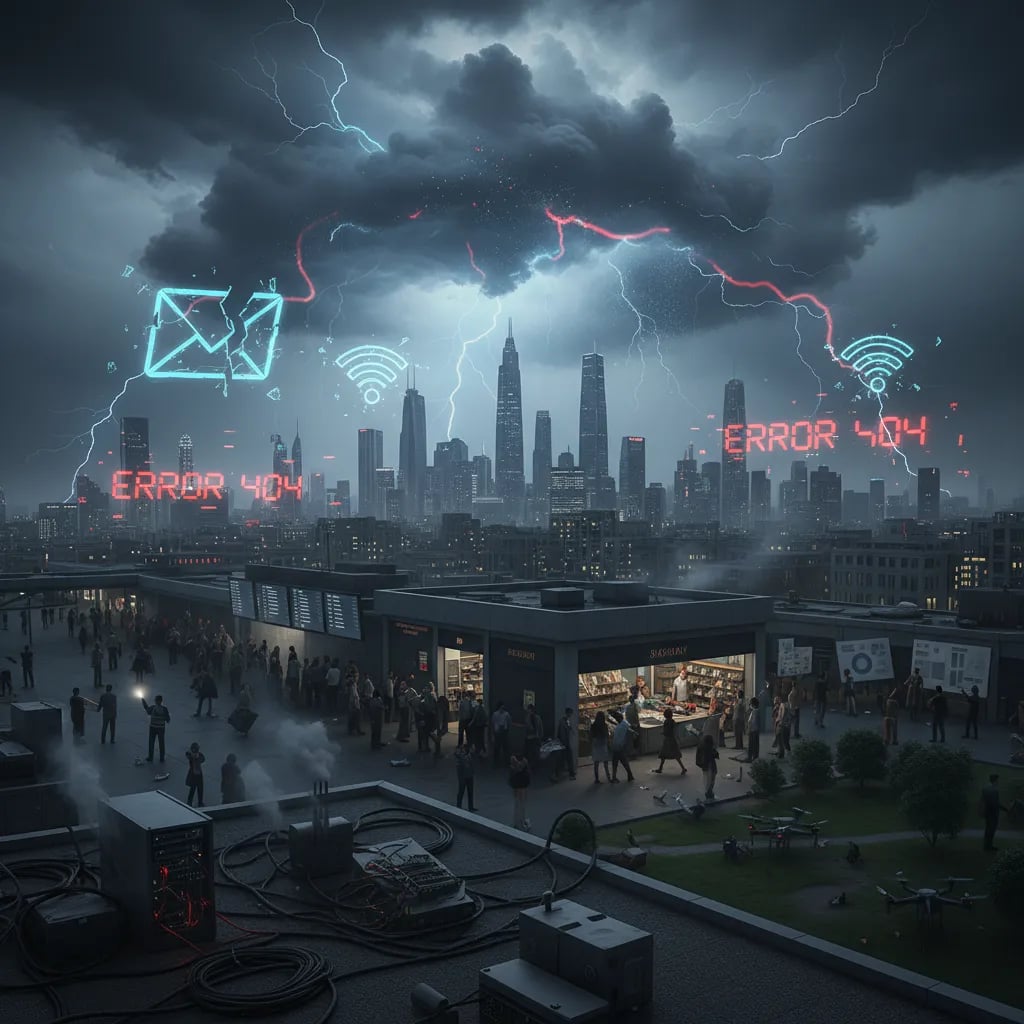

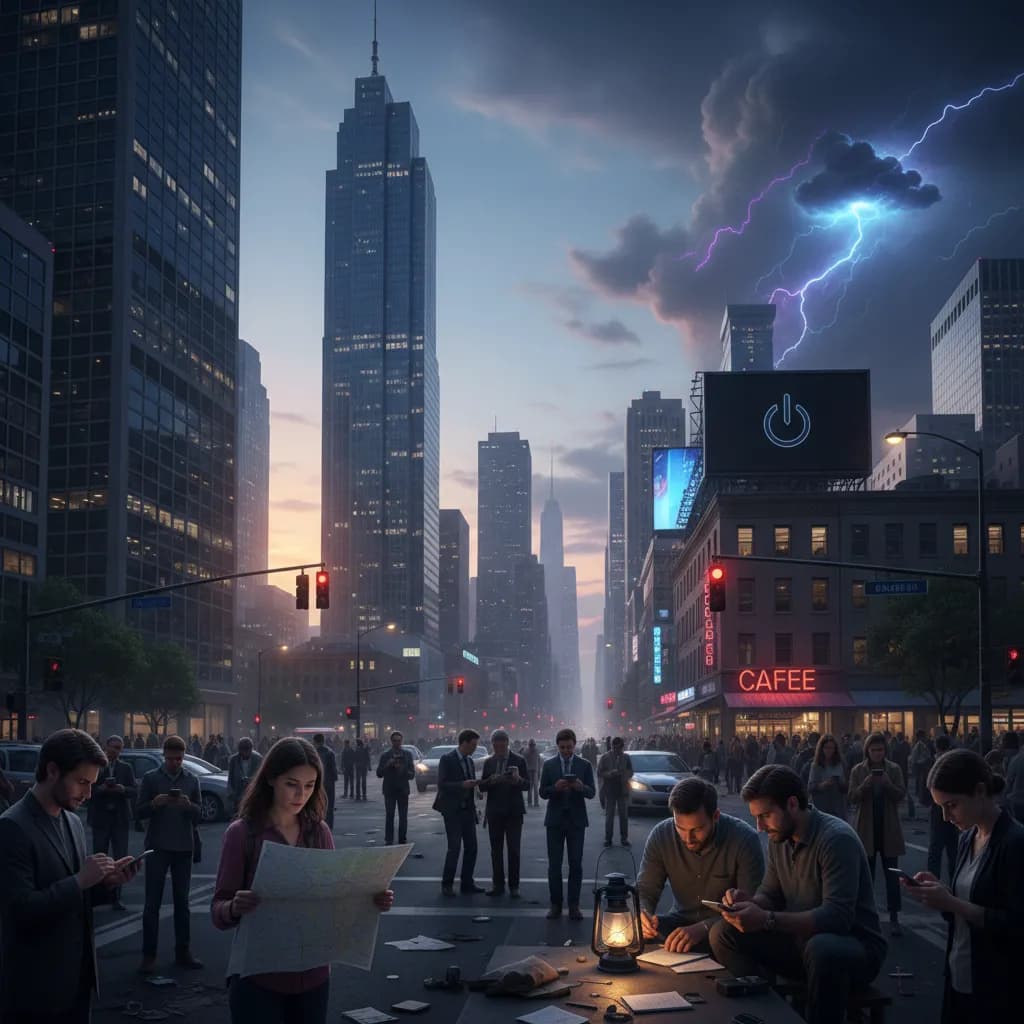

Last Tuesday was supposed to be like any other—until my Alexa stopped obeying orders, Amazon wouldn’t load, and everyone in my group chat started panicking about their crypto wallets being locked. I even joked about Jeff Bezos accidentally locking us out of our own homes. But the laughter faded as I realized: we’re all at the mercy of a few tech juggernauts. When Amazon’s servers hiccuped—and the world coughed—the ripple effects got personal, fast. Today, let’s dig into how a simple outage became a wake-up call for our digital dependency—and why it matters way, way more than most headlines admit.
When the Cloud Isn’t There: Personal Chaos & Strange Moments
When the AWS outage hit on October 20, 2025, the impact was immediate and personal. You might have noticed Snapchat refusing to load, but that was just the beginning. The AWS outage impact rippled across your digital life, exposing cloud services reliability issues in ways that felt both chaotic and strangely intimate.
- Social apps went silent: Snapchat users found themselves locked out, unable to send a snap or check messages. The frustration was real, but it was only a hint of what was to come.
- Financial platforms outage consequences: At 3:00 a.m., millions suddenly couldn’t access their Coinbase or Robinhood accounts. Crypto holders were locked out of their assets, unable to trade or even check balances. For many, this was a wake-up call about the vulnerabilities in digital infrastructure.
- Family safety in question: Life360, the app many families use to track loved ones, simply displayed a technical error. Suddenly, you couldn’t check if your partner made it home or if your kids were safe.
- Home security failures: One Reddit user shared a chilling story: their Amazon Blink security camera, which they paid to record 24/7, failed to capture footage during an attempted arson. Despite receiving motion alerts, the camera had no recordings from that morning—all because of the AWS outage.
- Smart homes turned “dumb”: For those with Alexa-controlled lights, beds, or doorbells, the outage meant total loss of control. As one user put it, “I can’t turn them on or off without Alexa because there isn’t a little spinny thing to turn them on and off. And Alexa is not working.”
Even flights were grounded and students couldn’t submit assignments. The outage didn’t just inconvenience—it disrupted daily routines and exposed how much we rely on cloud-based systems.
But that’s the problem, we’ve surrendered control of our daily lives to a handful of tech billionaires.
The AWS outage revealed just how fragile our digital infrastructure can be. From financial chaos to personal safety concerns, millions experienced firsthand the risks of putting so much trust in the cloud. As we move forward, these digital infrastructure vulnerabilities demand attention and better planning for reliability and redundancy.

Amazon Holds the Keys—And the Competitors' Too
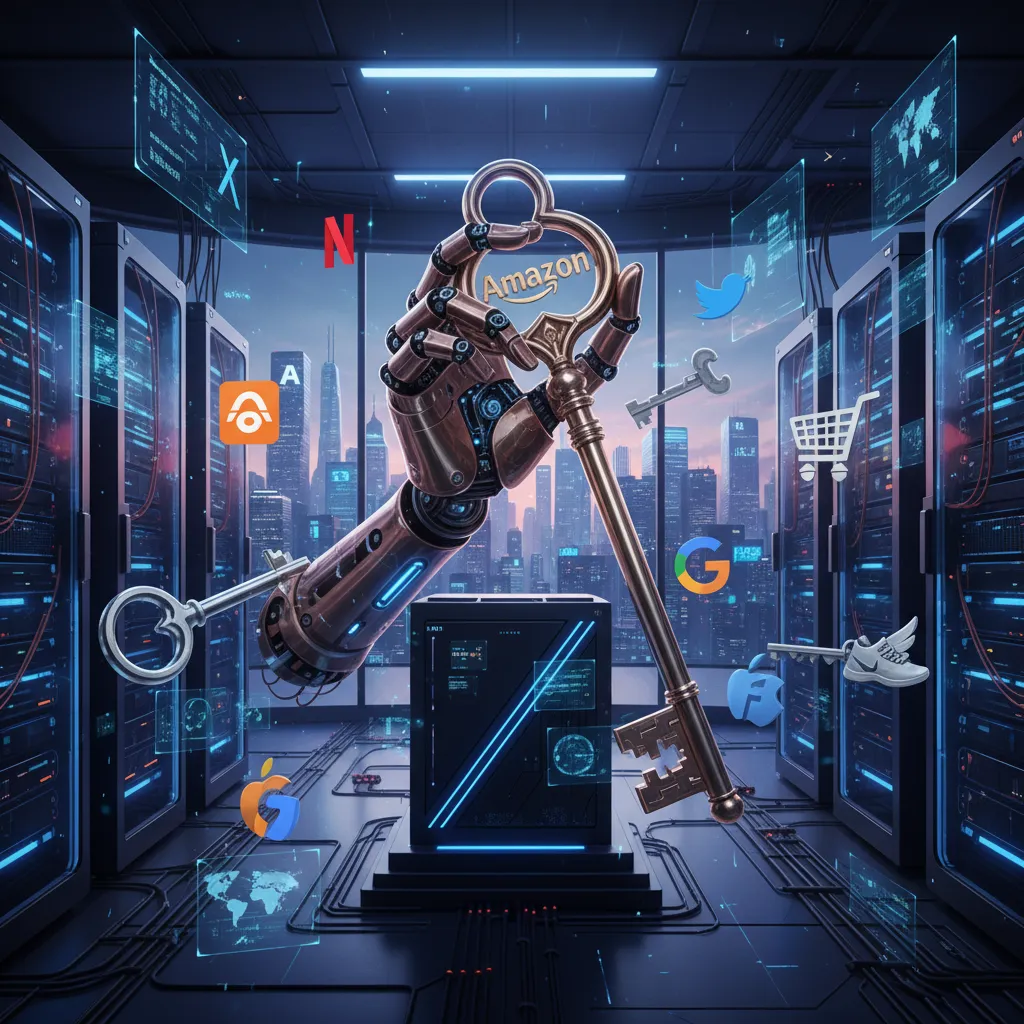
When the AWS outage struck, it didn’t just take down Amazon’s own services—it exposed a deep Amazon infrastructure dependency that runs through the entire digital world. Even Amazon’s direct competitors, like Google, Microsoft, and Oracle, were hit hard. For a few tense hours, Google Search was offline, Microsoft Teams stopped working, and at least ten national health services in the UK using Oracle’s systems went dark. All of these platforms, despite their size and resources, rely on Amazon’s cloud backbone to keep their services running.
This event highlighted a critical vulnerability in our digital infrastructure. In 2022, the US government awarded a $9 billion contract to Amazon, Microsoft, Oracle, and Google to build and maintain essential digital systems. You might expect this would create redundancy and resilience. Instead, the outage revealed that these tech giants are deeply intertwined—sometimes even sharing the same cloud territory. As a result, when Amazon stumbles, everyone else feels the shockwaves.
Today, Amazon controls 30% of the internet. But their competitors also need them.
To put this in perspective, think back to 1909, when Standard Oil controlled 91% of the oil industry. The government called it a monopoly and broke it up into 37 companies. Now, Amazon controls about 30% of the internet’s cloud infrastructure. But unlike oil, the digital world is even more interconnected. Even Amazon’s competitors are forced to rely on its systems, making true independence almost impossible.
- Critical services paralyzed: National health systems, financial platforms, and educational tools all ground to a halt.
- Government contracts with tech: The $9 billion deal means even public services are tied to Amazon’s reliability.
- Cloud services reliability issues: The outage showed that multi-cloud redundancy is not always in place, leaving organizations exposed.
What’s more troubling is that this isn’t an isolated incident. Outages are becoming more frequent, and each time, the impact grows. Last year, a faulty update from Crowdstrike knocked out 8.5 million Microsoft Windows systems—another reminder of our digital infrastructure vulnerabilities heading into 2025. When the dust settles and systems reboot, the core issue remains: a handful of tech giants, especially Amazon, hold the keys to the digital kingdom—and everyone else, even their fiercest competitors, must play by their rules.
Profiting From the Panic: How Outages Boost Big Tech
When the AWS outage hit, panic spread fast. Users worried about their daily streaks on apps like Duolingo, but for businesses, the stakes were much higher. Financial losses during the outage ranged from $5,000 to $9,000 per minute, and the reputational damage was impossible to ignore. Yet, in a twist that reveals the true Tech giants monopoly effects, the chaos didn’t hurt Amazon’s bottom line—in fact, it boosted it.
Here’s how it works: When a major cloud provider like AWS goes down, companies scramble to make sure it doesn’t happen to them again. The first thing they do is buy more Amazon services, especially those promising “redundancy.” In the cloud industry, redundancy means paying for extra backup systems and failover support, all hosted by the same provider. This is supposed to protect you from future outages, but it also deepens your Amazon infrastructure dependency.
- After the AWS outage, many companies rushed to purchase extra cloud backups and redundancy contracts.
- This “panic buying” directly increases Amazon’s profits, as more services are added to existing contracts.
- Wall Street knows this pattern. The day after the outage, Amazon’s stock price actually went up.
It’s a paradox: The more you fear outages, the more you spend on the same provider that failed you. As one industry observer put it:
Every time Amazon has an outage, they profit from it.
This cycle is at the heart of the vendor lock-in risk. Once you’ve built your business on Amazon’s infrastructure, switching providers is costly and complex. Outages highlight the dangers of this dependency, but they also push you further into Amazon’s ecosystem. The AWS outage impact was amplified by the regional concentration of services—when one region failed, tightly coupled managed services across the globe were affected. This only increased the urgency for companies to buy more redundancy, often from the same provider.
Even governments aren’t immune. Amazon, Microsoft, Oracle, and Google recently secured a $9 billion contract to provide digital infrastructure to the U.S. government, showing just how deep this dependency goes. In the end, outages don’t just expose the risks of cloud reliance—they also reveal how Big Tech can profit from the very panic they create.
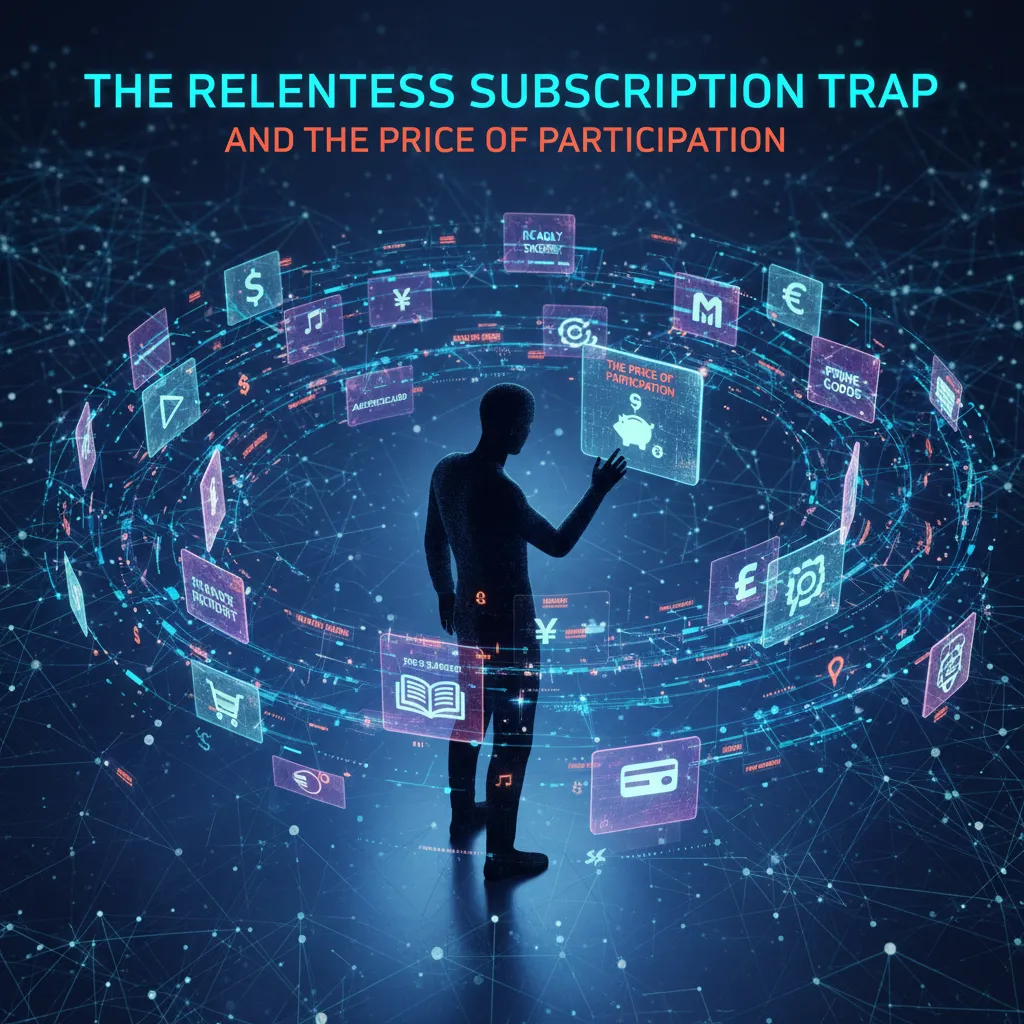
The Relentless Subscription Trap—and the Price of Participation
Welcome to the subscription economy, where you don’t own your digital life—you rent it. From the apps on your phone to the software in hospitals, schools, and even your car, the shift to monthly fees is everywhere. As one observer put it:
“There’s no more ownership, it’s just usership.”
This relentless subscription model has a hidden cost that goes far beyond convenience. In healthcare, for example, Epic Systems—a company whose software manages records for 325 million patients—charges hospitals for access to its electronic health records. But that’s just the start. Hospitals then pay tech giants like Amazon Web Services (AWS) to store this sensitive data in the cloud. When Epic or AWS raises their fees, hospitals pass those costs along by increasing prices for care, which leads to higher insurance premiums for everyone. This is the subscription economy impact in action—an invisible “tech tax” that trickles down to your wallet.
It doesn’t stop at healthcare. Schools pay for learning platforms like Canvas, which also rely on AWS for data storage. Grocery stores, utility companies, and even your car insurance provider are all hooked into this web of software subscriptions and cloud services. Every time these companies face a price hike from a tech giant, they quietly adjust their own prices or tack on vague “service fees”—never mentioning that it’s a direct result of tech giants monopoly effects.
Meanwhile, the cost of keeping our digital lives running is rising fast. Data centers powering AWS and artificial intelligence consume enormous amounts of electricity. In Michigan alone, utility regulators approved a $590 million rate hike for 2025, plus another $157 million for natural gas—much of it to meet the energy demands of data centers. This energy consumption data centers crisis means higher utility bills for everyone, as basic services like power and water are increasingly privatized or monopolized to feed the cloud’s hunger.
Every time you pay a medical bill, a school fee, or your electric bill, you’re not just paying for the service—you’re funding the infrastructure of the digital world, often without realizing it. The price of participation in modern life is no longer just the sticker price. It’s a continuous stream of hidden costs, quietly passed down from the world’s biggest tech companies to you.
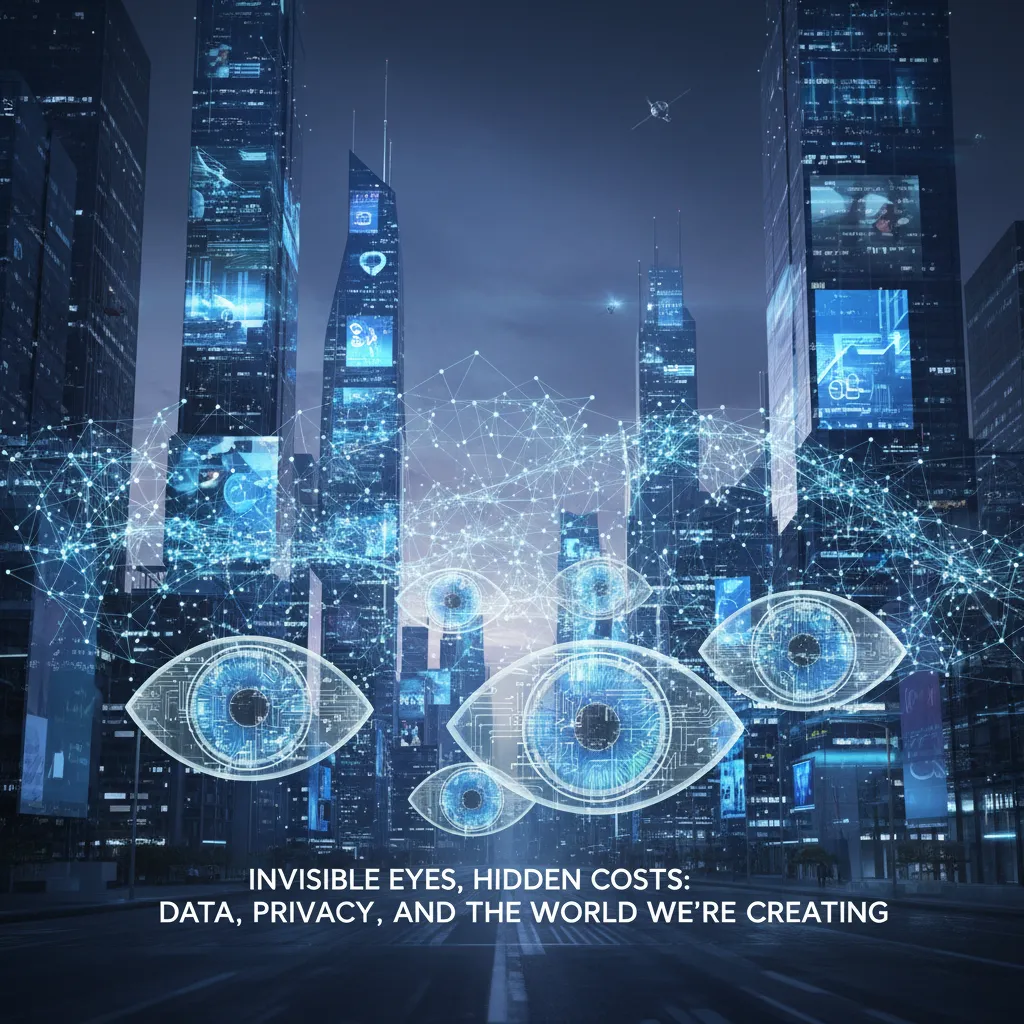
Invisible Eyes, Hidden Costs: Data, Privacy, and the World We’re Creating
Every smart gadget in your home—whether it’s a bed that tracks your sleep, a water filter, or a doorbell camera—is quietly collecting data about you. These devices don’t just serve you; they spy on you, capturing your routines, habits, and even your most vulnerable moments. That data doesn’t stay private. Instead, it’s stored in the cloud, analyzed, and often sold to companies eager to target you with ads or services when you’re most likely to respond. For example, if your smart bed knows you’re awake at 3:00 a.m. stressed about work, you might suddenly get a perfectly timed Netflix notification or a targeted ad for sleep aids.
The recent AWS outage showed just how fragile—and invasive—this interconnected digital world has become. When the cloud goes down, your reminders, your security cameras, and even your water filter can stop working. But the real cost isn’t just inconvenience. It’s the ongoing loss of privacy and control over your own data. These data privacy concerns are not hypothetical; they’re the reality of the global digital economy.
But the story doesn’t end with tech giants. Increasingly, investment firms controlling infrastructure are shaping the world behind the scenes. Private equity giants like Blackstone are buying up the very utilities that power our digital lives. Blackstone recently bought a 620-megawatt natural gas power plant for nearly $1 billion and acquired TXNM Energy, serving 800,000 customers. As one observer put it,
“They literally own the power switch to entire cities.”When these companies take utilities private, regulation and oversight often disappear—giving them the power to set prices and control access to essentials.
Meanwhile, tech giants monopoly effects and wealth concentration are reaching new heights. The UK’s richest 1% now own more than the bottom 70%. In Sweden, the top 10% control 74% of the nation’s wealth. By 2030, experts predict five trillionaires will exist, fueled by a $29 trillion wealth transfer in the US alone. As more of what you use becomes a subscription—your car, your software, even your doorbell—ownership slips away, replaced by endless payments and growing inequality.
Conclusion: What Do You Actually Own in the Digital Age?
The recent AWS outage impact has forced us to confront a hard truth about our digital lives: when the cloud collapses, what do you really own? In a world where three companies control the backbone of the internet and billionaires are buying up everything else, the idea of digital ownership feels more like an illusion than a right. When their systems fail, their stock prices can even rise, showing just how disconnected our interests are from those who hold the power. This is not just a technical glitch—it's a preview of a future where a handful of people hold the off switch to your daily existence.
This moment exposes deep digital infrastructure vulnerabilities 2025 and beyond. The cracks in the system are starting to show, and every day it becomes harder to ignore that the model is failing. We are living in a new Gilded Age, where wealth and control are more concentrated than ever. In the next 30 years, the U.S. will see $29 trillion in inherited wealth, further widening the gap between those who own and those who simply use. The concept of “usership” has replaced true ownership—your books, music, photos, and even your work exist at the mercy of remote servers and corporate policies.
But history offers perspective.
Every Gilded Age has ended, every monopoly has eventually been broken.Past monopolies like Standard Oil seemed unbreakable—until they weren’t. Today, the growing conversations about power imbalance and dependency are signals that change may be on the horizon. The discussion itself is proof that awareness is rising, and that’s the first step toward real solutions.
After the systems reboot, nothing fundamental changes—unless you demand it. Recognizing the problem is the beginning, but lasting change will require collective will and possibly new regulations. The parallels to historical monopolies are clear: concentrated power never lasts forever, but it rarely fades without a fight. The cracks are showing, and the conversation is moving. Maybe, just maybe, change is already on the way.
