

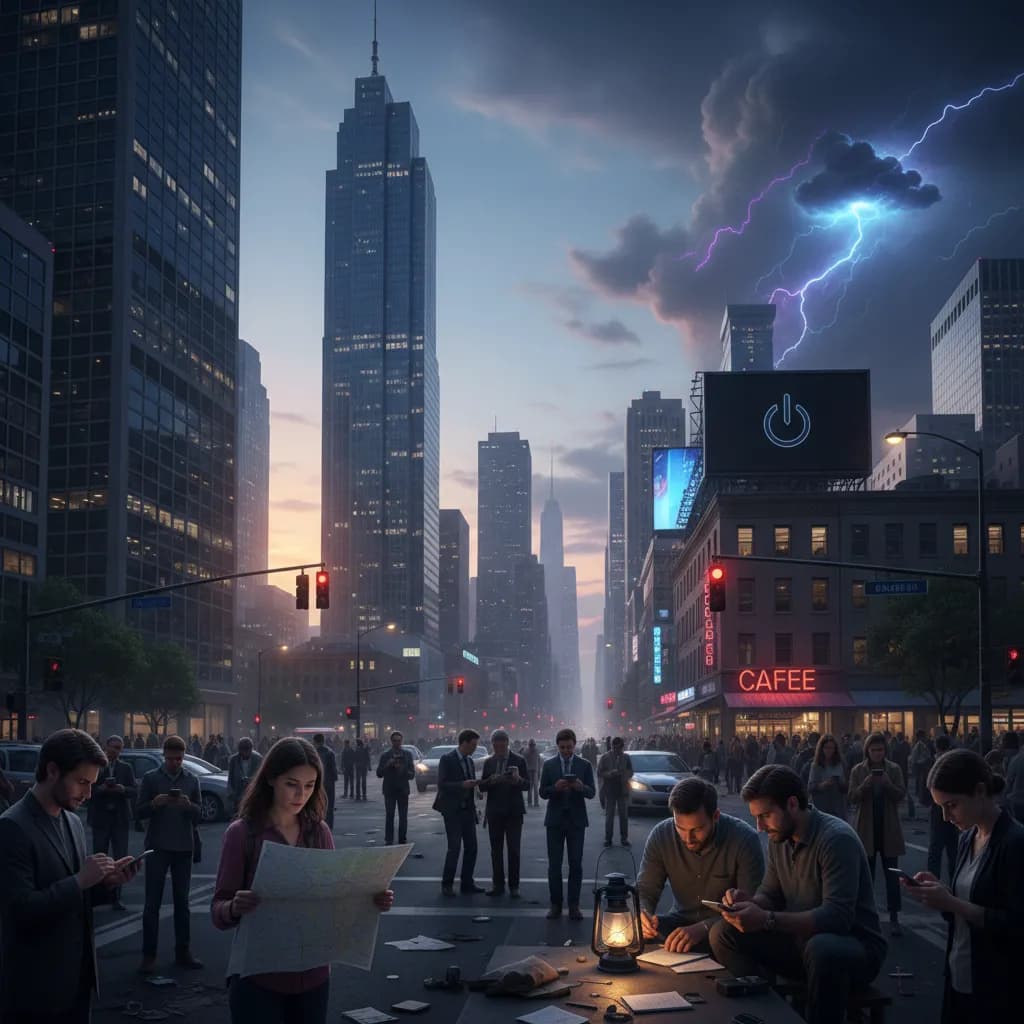
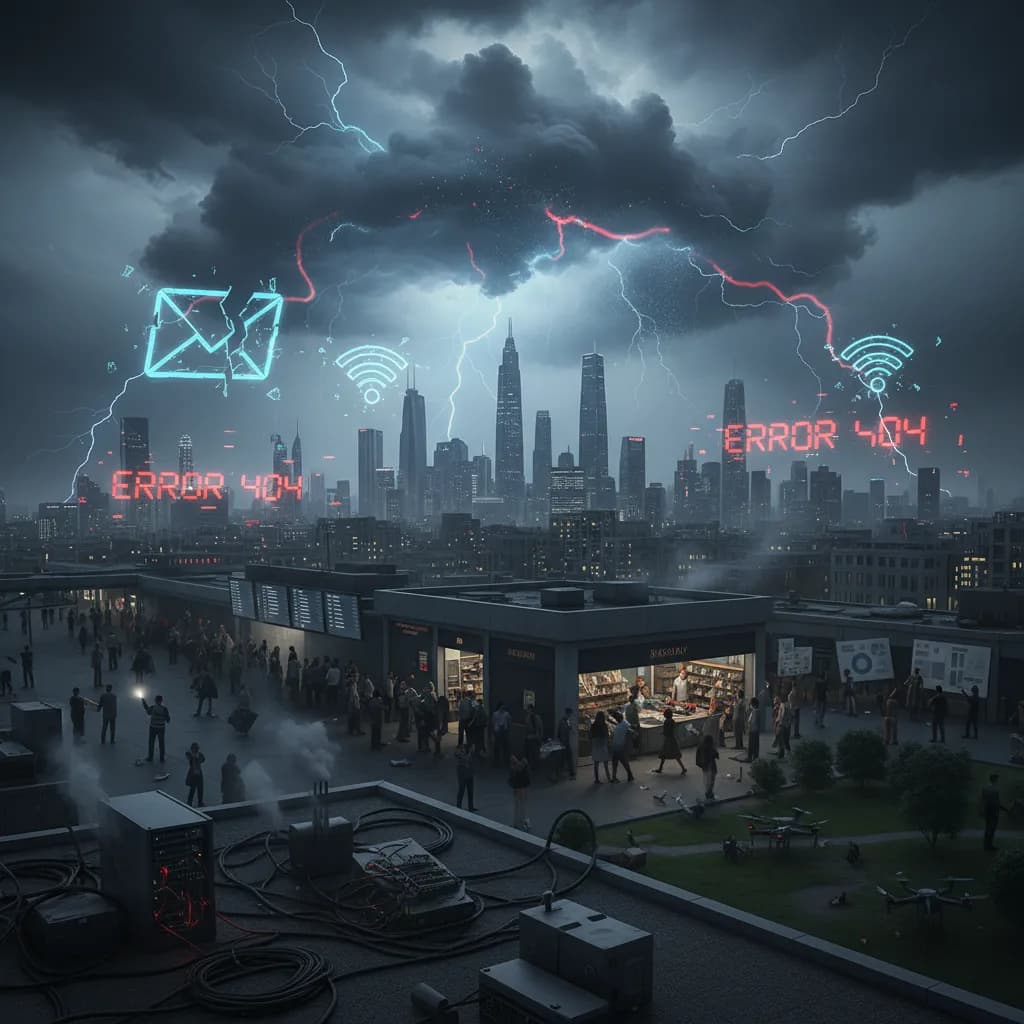
The last time my lights wouldn't turn on, I blamed myself—or, embarrassingly, the family dog. Turns out, Alexa couldn’t help because the entire Amazon Web Services cloud was down. In that moment, it hit me: a handful of tech bigwigs somehow hold the keys to my front door, my bank account, and, apparently, my kitchen lights. Let’s unravel what happened the night the cloud fizzled out—and why it matters to people like you and me.
A World on Pause: How a Cloud Outage Unraveled Daily Life
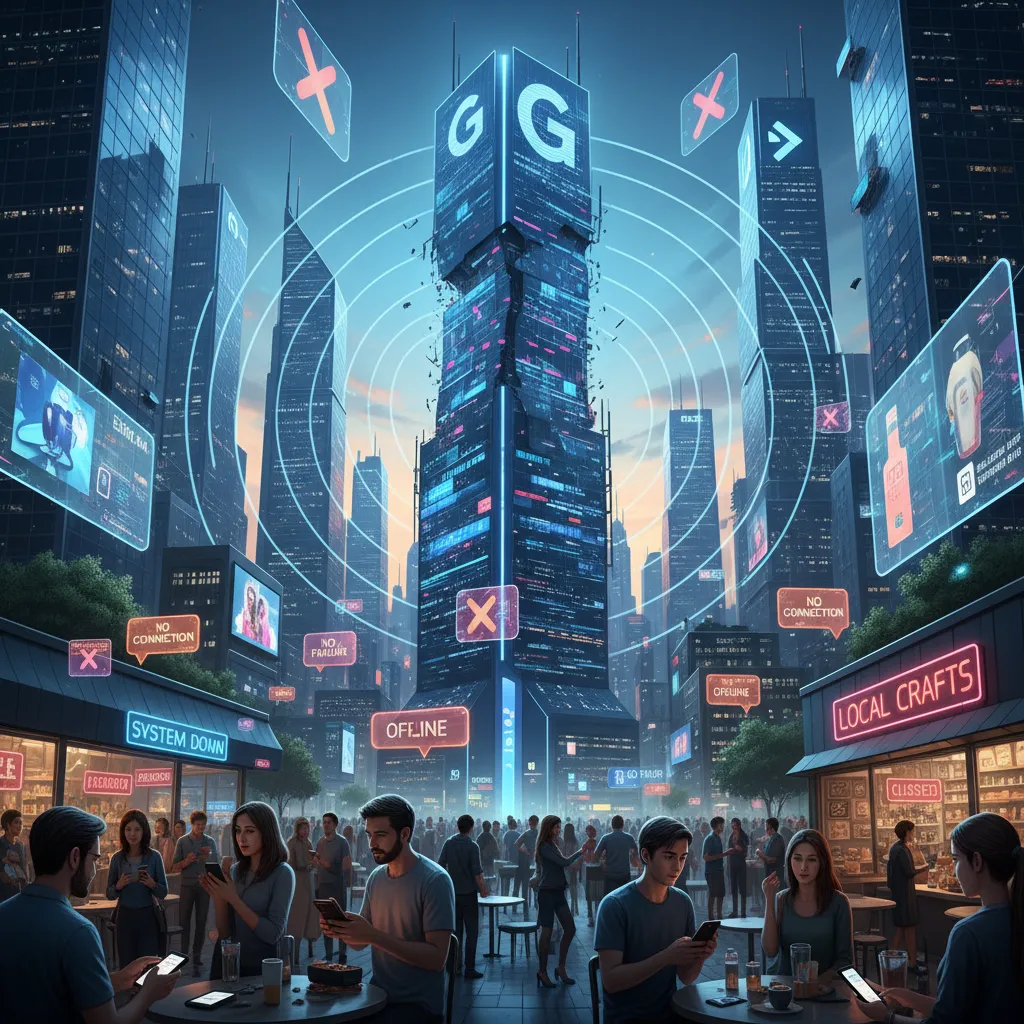
Imagine waking up at 3:00 AM, reaching for your phone, and discovering that Snapchat, Coinbase, Robinhood, and other major apps simply won’t load. This was the reality for millions during the October 2025 AWS outage, when a DNS failure in the US-EAST-1 region triggered a massive Amazon Web Services disruption that rippled across the globe. Suddenly, the invisible infrastructure powering daily life was gone, and the world hit pause.
The AWS outage impact was immediate and far-reaching. Flights were grounded worldwide, leaving travelers stranded and airlines scrambling. Students, ready to submit assignments, found their educational platforms offline—deadlines became impossible to meet, not because of procrastination, but because the apps had vanished. Financial services like Coinbase and Robinhood locked out millions, freezing access to crypto accounts and digital wallets at a critical hour.
- Flights grounded: Travel plans for thousands stalled as airline systems went dark.
- Education disrupted: Students couldn’t submit homework or access learning tools.
- Financial chaos: Millions lost access to their money and investments.
- Home security failures: One Reddit user watched helplessly as someone tried to burn their house down, while their Blink camera—dependent on AWS—recorded nothing despite motion alerts.
This network outage ripple effect didn’t stop at public services. In homes, smart lights and Alexa-powered devices became useless. As one user put it, “My lights are controlled by Alexa, which runs off Wi-Fi, and I can’t turn them on or off without Alexa, because there isn’t a little spinny thing to turn them on and off and Alexa is not working.” Even basic actions like turning on a light or checking a loved one’s location on Life360 became impossible.
With AWS controlling roughly 30% of the internet’s infrastructure, the outage exposed just how much of modern life depends on a handful of tech giants. As one frustrated user noted:
We’ve surrendered control of our daily lives to a handful of tech billionaires.
The cloud infrastructure dependency revealed by this event was stark. From social media and streaming to home security and finances, the digital life disruptions caused by a single AWS region failure showed how fragile our connected world really is.
When Tech Titans Catch a Cold, Everyone Sneezes: Outage Ripple Effects
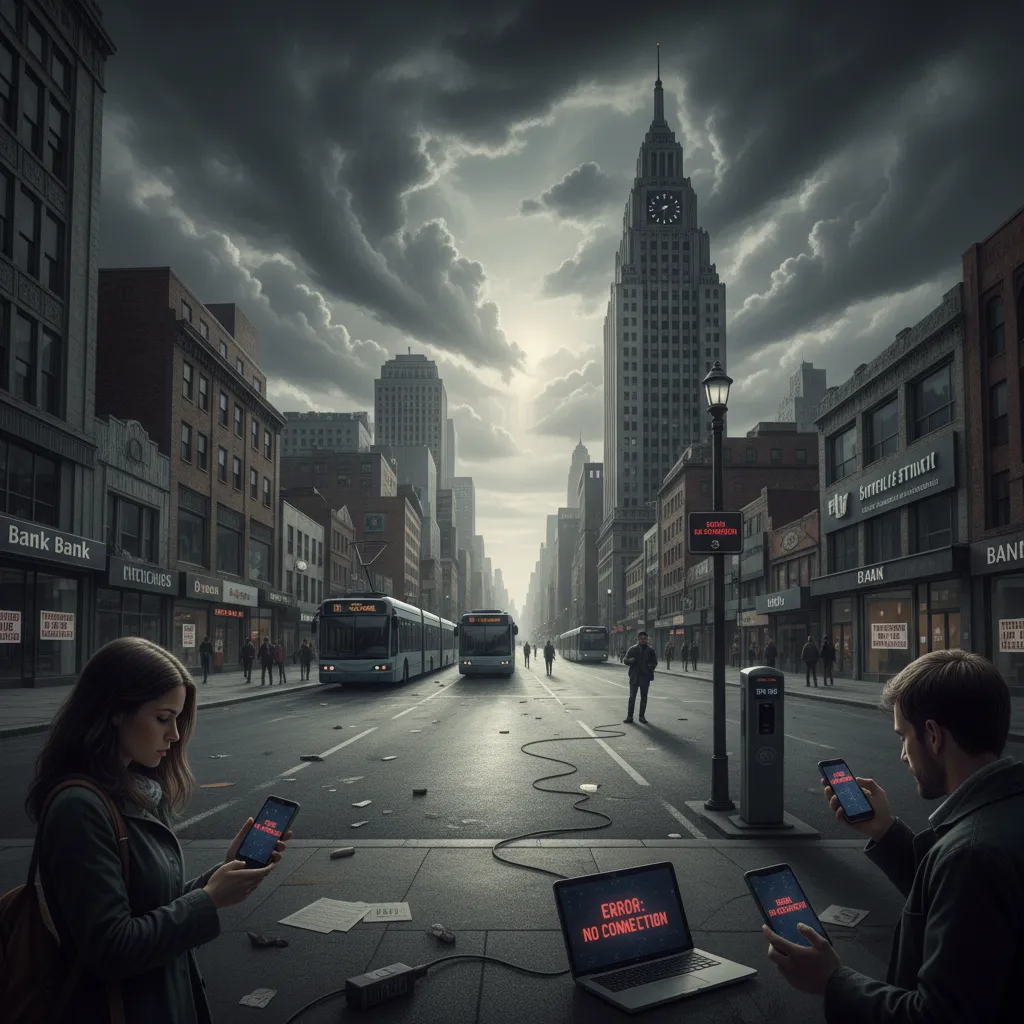
When a cloud outage strikes, the impact isn’t limited to one company or even one industry. The reality of today’s digital world is that even tech giants like Google, Microsoft, and Oracle—supposed competitors—are deeply intertwined through shared infrastructure. Many of their core services run on Amazon Web Services (AWS), especially in the critical AWS US-EAST-1 region. So, when AWS stumbles, the cloud outage impact ripples across the globe.
During a recent AWS outage, Google Search went offline, Microsoft Teams stopped working, and at least 10 UK national health services using Oracle were paralyzed. This isn’t just an inconvenience—it’s a clear sign of how tech monopolies infrastructure creates layers of vulnerability. Even the U.S. government, which awarded a $9 billion contract to Amazon, Oracle, Microsoft, and Google to build critical digital infrastructure, saw that all these giants are still dependent on AWS at their core.
The outage impact on services extends far beyond tech. Professionals and students found themselves locked out of essential tools like Microsoft Teams and Canvas. Hospitals relying on Epic Systems—serving 325 million patients—scrambled as cloud-based health records became inaccessible. As one healthcare worker described during a Microsoft outage:
“Computers are black, we have the screen of death… we don’t have access to patient charts. Our downtime computer is down. I work with Epic. Epic is now self-deleting off of the Microsoft computers when we’re able to turn them on, but as soon as we turn them on they turn back down.”
This outage impact healthcare directly, putting patient safety at risk. The problem is compounded by vendor lock-in—companies give up their own infrastructure to rent from cloud providers, leaving them powerless during outages. As AWS, Google, and Microsoft convinced organizations to move to the cloud for cost savings and simplicity, they also created a single point of failure.
- Flights were grounded.
- Students couldn’t submit assignments.
- People couldn’t access their money.
These are not isolated incidents. Every time the AWS US-EAST-1 region goes down, the world feels it. The cloud outage impact is a wake-up call: our modern lives are more connected—and more vulnerable—than ever before.
Owning Nothing, Renting Everything: How Subscription and ‘Amazon Taxes’ Drain Us
The subscription economy is quietly changing your rights as a consumer. Instead of owning products or software, you’re now renting access—often at a higher long-term cost. This shift, fueled by cloud computing and rising service costs, impacts nearly every industry and trickles down to your wallet in ways you may not realize.
Take healthcare: when Epic, the software used by hospitals serving over 325 million patients worldwide, raises its subscription fees, hospitals must pay more. But it doesn’t stop there. These hospitals also rely on cloud hosting—often Amazon Web Services (AWS)—to store patient data. When Amazon increases its rates, hospitals face a second wave of rising costs. The result? Hospitals raise their prices, and insurance companies respond by hiking your premiums. This cycle means you’re paying what’s been called an Amazon tax—hidden service fees that appear on your medical bills, insurance statements, and even utility bills.
“We’re funding Jeff Bezos’s lifestyle through every medical bill.”
But it’s not just healthcare. Grocery stores, utility companies, car insurers, and even schools (using platforms like Canvas) all rely on cloud computing. When their tech costs go up, so do your bills. These increases are rarely labeled as “Amazon price hikes.” Instead, they’re buried in vague “service fees,” making it hard to trace the source of your rising expenses.
Ownership is disappearing across the board. Once, you could buy Adobe Photoshop for a one-time fee of $699. Now, it’s $23 per month—forever. Toyota charges $8 monthly for remote start on cars you already own. Even smart beds, doorbells, and fitness rings like the $300+ Aura require ongoing subscriptions to unlock full features. As one observer put it:
“There’s no more ownership, it’s just user ship.”
The further we march into the cloud, the more we pay—both directly and indirectly. The subscription economy erases ownership rights and shifts the burden of rising service costs onto consumers. In this new landscape, you’re not just buying products; you’re renting access, often at the mercy of tech giants and their ever-increasing fees.
Big Data, Bigger Eyes: The Price of Convenience Is Your Privacy (And the Planet)
Every time you bring a new smart device into your home—a bed that tracks your sleep, a water filter that monitors usage, or a doorbell camera that streams to the cloud—you’re trading convenience for something much bigger: your privacy and the health of the planet. These devices don’t just make life easier; they quietly collect data on your daily routines, habits, and even vulnerabilities. As one observer put it,
All these smart devices that fell during the outage, like the smart bed, the water filter, the doorbell camera, they're all spying on you collecting data and storing it in the cloud.
The data privacy risks are real. Every action—when you turn on the lights, when you wake up, when you leave home—is logged and analyzed. This information is sold to marketers who target you at your most vulnerable moments, like sending insomnia ads at 3:00 AM when your smart bed detects you’re awake. The rise of data privacy smart device monitoring means your behaviors are constantly tracked, often without your full awareness.
But the price of this convenience isn’t just your privacy—it’s also your utility bill and the environment. The cloud that stores your secrets is powered by massive data centers. These facilities have a huge appetite for electricity, driving up demand and costs. In Michigan, for example, data center electricity bills have soared, leading to $590 million in rate hikes for 2025, plus an additional $157 million increase for natural gas. Nationwide, 56% of data centers now run on natural gas, directly fueling climate change through increased fossil fuel consumption.
This surge in electricity demand data centers creates a ripple effect. States are forced to approve rate hikes, and utilities turn to more fossil fuels to keep up. The same cloud that enables your smart home quietly strains local power grids and draws water from stressed lakes and rivers, compounding the environmental impact. The cycle is clear: as tech companies push more subscription-based smart devices, you pay not just with your data, but also through higher bills and a warming planet. The climate change energy consumption tech companies drive is now a hidden cost of your digital lifestyle.
Who Owns the Off Switch? Power, Wealth, and a World of Growing Inequality
When you think about tech monopolies and infrastructure, you might picture cloud servers and data centers. But today, billionaire influence and wealth inequality go far beyond the digital world—they reach right into the physical systems that keep your lights on. Private capital is buying up utilities and critical infrastructure, and with deregulation, these companies can now dictate rates and access for entire cities.
Take Blackstone, the world’s largest alternative asset manager. They recently bought the Hilltop Energy Center, a 620-megawatt natural gas plant in Pennsylvania, for nearly $1 billion. In May, Blackstone acquired TXNM Energy, a regulated utility serving 800,000 people in New Mexico and Texas. But here’s the catch: after the acquisition, Blackstone took TXNM private. That means no more public oversight or regulation. As one observer put it,
“They literally own the power switch to entire cities.”
This isn’t just about one company. The concentration of ownership is staggering. BlackRock, Vanguard, and State Street—three asset managers—collectively own about 22% of every company listed on the S&P 500. That’s more than 500 essential companies under the voting power of a tiny group. This level of corporate influence by BlackRock, Vanguard, and others shapes everything from your energy bill to your access to technology.
Meanwhile, the wealth gap keeps widening. The days of self-made billionaires are fading. In the next 30 years, the U.S. will see $29 trillion passed down to billionaire heirs. As the saying goes,
“So much for pull yourself up by your bootstraps—they own the boots.”This shift from makers to inheritors means more wealth is locked at the top, while millions face rising costs and even loneliness. In fact, people making over $100,000 a year report being less lonely, and higher income directly correlates with happiness.
This isn’t just an American issue. The UK’s richest 1% own more than the bottom 70% combined. In Sweden, the top 10% hold 74% of the wealth. As private capital and tech monopolies tighten their grip on utilities and infrastructure, the world is seeing new records in wealth inequality—and everyday people are left paying more for less, with less control than ever before.
Wild Card: When the Digital World Gets Lonely
Modern technology promises that you’re never truly offline. With a smartphone in your pocket and the cloud always humming in the background, it can feel like connection is just a tap away. But when digital life disruptions strike—whether from tech failures or outages—the cracks in this promise become painfully clear. Suddenly, you’re reminded that even in an ultra-connected age, loneliness can be just a click away.
Research paints a stark picture: Gen Z is now the loneliest generation ever recorded, closely followed by millennials. The US government’s own data confirms a growing loneliness epidemic among these younger generations. Ironically, these are the very groups most immersed in digital life, where ‘user-ship’ has replaced ownership and social feeds have replaced face-to-face friendships. Yet, as technology becomes more seamless, what’s really missing is genuine human connection.
When tech failures disrupt your digital routine, the sense of isolation can feel even sharper. It’s not just about losing access to your favorite apps or services—it’s about losing the fragile threads of community that digital platforms promise but rarely deliver. The loneliness epidemic Gen Z faces is compounded by these disruptions, highlighting how dependent we’ve become on technology for social interaction, and how shallow that interaction can sometimes be.
Meanwhile, the digital world’s abundance hasn’t translated into equal happiness or opportunity. Despite the promise of technology bringing joy and prosperity, wealth inequality is widening. In Italy, the wealthiest 10% control 60% of net wealth. In the UK, the richest 1% own more than the bottom 70% combined. As ownership declines and ‘user-ship’ rises, community trust and real connection erode. Higher incomes may statistically correlate with lower loneliness, but digital disruption hasn’t distributed wealth—or connection—equally.
The US government's own data shows that the US is in a loneliness epidemic. Gen Z is the loneliest generation ever recorded with millennials right behind them.
Sometimes, a downed cloud isn’t just about lost convenience, but lost connection—and maybe, a reason to ask what we’re really getting for all this digital dependency. As tech failures disruption becomes more common, perhaps it’s time to rethink what connection means in the digital age, and how we can reclaim a sense of community that technology alone can’t provide.
