
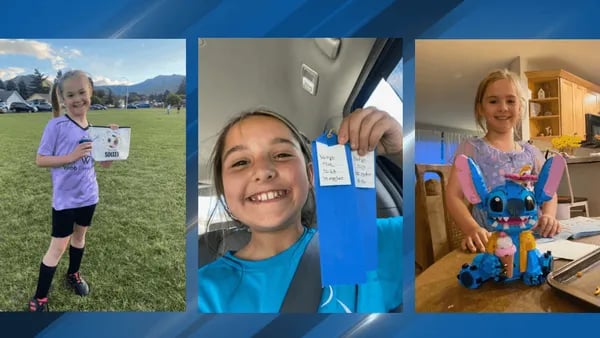



Late one Monday, my phone buzzed with an alert that caught me off guard: three Wenatchee girls found dead, father wanted for murder. I’m a parent myself—my mind whirred with horror, sympathy, and, honestly, a flood of angry questions. As the Chelan County case unfolded in headlines and social feeds, it wasn’t just the facts that felt heavy; it was the sheer weight of what-ifs, community grief, and all the painful red flags we too often catch in the rearview mirror.
Section 1: "Wenatchee Girls Found"—Names and Humanity Amid Headlines
When you hear the phrase “Wenatchee Girls,” it’s easy to lose sight of the real children behind the headlines. But Paityn, Evelyn, and Olivia Decker were more than just names in a Chelan County case. They were sisters—Paityn, 9; Evelyn, 8; and Olivia, just 5—each with their own personalities, laughter, and dreams. All three attended Lincoln Elementary School, where their absence now leaves a silence that echoes through classrooms and hallways.
Their story began to unravel late Friday night. After a scheduled visitation with their father, Travis Decker, the girls did not return home. Their mother reported them missing after 9:45 p.m., and the anxiety in the community quickly grew. The Wenatchee Police Department acted fast, but the case didn’t meet the strict criteria for an Amber Alert. Instead, an Endangered Missing Person Alert (EMPA) was issued, and the search for the missing children intensified across Chelan County.
Every detail in this case mattered. Authorities tracked Decker’s white 2017 GMC Sierra pickup, last seen heading westbound on Highway 2. By Monday, the search had narrowed to the rugged area between Icicle Road and Chumstick Road near Leavenworth. A Forest Service deputy on patrol spotted the unoccupied truck about 17 miles up Icicle Road. Nearby, the bodies of Paityn, Evelyn, and Olivia were discovered. Their father, now wanted for three counts of first-degree murder and kidnapping, was nowhere to be found.
The emotional toll on the Lincoln Elementary School community is immense. Superintendent Kory Kalahar addressed the heartbreak, saying:
"Our immediate and utmost priority is the well-being of the Lincoln Elementary community. We are focusing all our efforts on providing comprehensive support... during this unimaginable time."
The school district has made counseling available and shared resources to help families talk to children about loss. The ripple effect of this tragedy is felt far beyond the Decker family. Teachers, classmates, and neighbors across Wenatchee and Chelan County are left searching for answers, struggling to process the loss of three young lives.
It’s important not to let the ages—9, 8, and 5—become just statistics. These were children with friends, favorite books, and futures. Their story is a stark reminder that behind every endangered missing person alert are real people, and every timeline detail—from the last sighting to the discovery—matters deeply to a community still in shock.
Section 2: Systemic Gaps—Amber Alert Criteria & Endangered Missing Person Misconceptions
When tragedy strikes, your first instinct is to expect immediate action—especially when children are missing. In the Wenatchee case, the public’s outcry was swift: Why wasn’t an Amber Alert issued for Paityn, Evelyn, and Olivia Decker? The answer lies in the strict legal framework that governs these alerts, and the confusion that often follows when expectations and reality collide.
Amber Alert Criteria: What’s Required?
The Amber Alert system is designed to mobilize the public in the most urgent child abduction cases. According to the Washington State Patrol, the criteria are clear but rigid: the child must be under 17, there must be evidence of abduction, the child must be in imminent danger, there must be actionable information to share, and law enforcement must make the request. In this case, the Wenatchee Police Department did request an Amber Alert on Friday night, but the Washington State Patrol denied it. As they put it,
"The case did not meet stringent requirements needed for [Amber Alert]."
Instead, an Endangered Missing Person Alert (EMPA) was issued the next day.
Comparing Amber Alert and Endangered Missing Person Alert
Here’s where the systemic gap becomes clear. An EMPA, while still a public notification, does not trigger the same widespread, immediate broadcast as an Amber Alert. The difference is not just technical—it can affect how quickly and broadly the public is mobilized. In the Decker case, the EMPA was issued Saturday, a full day after the initial report. For families and communities, this delay can feel agonizing.
Potential Consequences: Did the Alert Choice Matter?
Did the choice between Amber Alert and EMPA impact the urgency or reach of the search? Research shows that Amber Alerts often lead to rapid public engagement, while EMPAs may not generate the same level of attention. The Wenatchee Police Department’s request reflected the urgency felt by the family and officers, but the legal definitions held sway.
Inside the Dispatcher’s Dilemma
Imagine you’re the dispatcher, fielding that first frantic call from a mother whose children haven’t come home. You want to act fast, but you’re bound by policy. The gap between what families expect and what the law allows is stark—and in moments like this, it’s painfully clear.
It’s a quick tangent, but worth noting: The public often assumes law enforcement can issue an Amber Alert at will. In reality, the process is tightly controlled, and the Wenatchee case shows just how much friction can exist between communal urgency and legal definitions. The result? Confusion, frustration, and, sometimes, a lingering sense that the system didn’t do enough.
Section 3: Travis Decker Wanted—Military Background, Custodial Red Flags, and the Search
The search for Travis Decker has gripped Chelan County and the wider Wenatchee community, as details emerge about his background and the tragic events that unfolded. Decker, 32, is now wanted on multiple murder charges—specifically, three counts of first degree murder and one count of first-degree kidnapping—after the bodies of his three young daughters were discovered near a campground. As the investigation deepens, questions about red flags and missed warning signs in contentious custody cases are front and center.
Travis Decker’s Profile: Military Training and Personal Upheaval
Travis Decker is described as a white male, 5’8”, 190 pounds, with black hair and brown eyes. At the time of the incident, he was reportedly living out of a white 2017 GMC Sierra pickup truck. Decker’s military background, including extensive training and a pending disciplinary discharge from the Washington National Guard, has heightened concern among authorities. His recent divorce, finalized in 2023, left him with a visitation arrangement for his daughters. Research shows that personal instability and military training can sometimes complicate risk assessments in custody disputes.
Timeline: From Missed Custody Exchange to Crime Scene Discovery
The sequence began late Friday night, when Decker failed to return his daughters—Paityn, Evelyn, and Olivia—after a scheduled visit. Their mother reported them missing at 9:45 p.m., prompting immediate action from Wenatchee Police. Despite a request for an Amber Alert, the case did not meet the criteria, so an Endangered Missing Person Alert (EMPA) was issued instead. Over the weekend, law enforcement agencies combed Chelan County, focusing on areas where Decker’s truck had been seen.
Multi-Agency Response and the Expanding Search
By Monday afternoon, a Chelan County Sheriff’s deputy found Decker’s unoccupied pickup 17 miles up Icicle Road. The subsequent search led to the heartbreaking discovery of the girls’ bodies, but Decker remained at large. Authorities quickly escalated the response, involving local, state, and federal agencies—including the East Cascade Regional SWAT Team and U.S. Border Patrol. The search area expanded, and roads near the scene were closed for investigation.
“Authorities said Decker should be considered armed and dangerous.” – Chelan County Sheriff’s Office
Red Flags and the Challenge of Predicting Risk
The case raises difficult questions: Can prior behavioral warning signs—such as homelessness, military discharge, or custody disputes—be reliably acted upon? Studies indicate that these factors can signal increased risk, but acting on them in real time remains a challenge for law enforcement and the courts. As the search for Decker continues, the community is left grappling with grief and uncertainty.
Section 4: The Shockwave—School, Town, and the Ripple of Support
When tragedy strikes close to home, the first ripples are often felt in the places meant to be safe—like Lincoln Elementary School. As news broke that three missing children from Wenatchee had been found dead, the school community moved quickly to support those most affected. The Wenatchee Police Department’s ongoing search for the girls’ father, Travis Decker, only added to the sense of urgency and grief.
Lincoln Elementary’s Immediate Response
Lincoln Elementary School wasted no time in organizing grief counseling for students and staff. According to Superintendent Kory Kalahar, “Our immediate and utmost priority is the well-being of the Lincoln Elementary community. We are focusing all our efforts on providing comprehensive support to their students, staff, and families during this unimaginable time.” Counselors were on campus the very next day, ready to help children process the loss of their classmates.
The district also distributed a family grief guide in both English and Spanish, recognizing the diverse needs of the community. These resources aimed to help parents talk to their children about the tragedy, offering guidance on how to approach difficult conversations about missing children and loss.
The School as an Emotional First Responder
Research shows that schools now play a central role in navigating traumatic events. Lincoln Elementary’s swift deployment of support services highlights how educational institutions act as emotional first responders. The school became a safe haven, not just for students, but for teachers and families grappling with shock and sorrow.
“We are deeply grateful for our community's compassion...allow our students, staff, and families the space and privacy they need to mourn and begin healing.” – Superintendent Kory Kalahar
Community Support and Civic Action
The tragedy sparked a wave of community support. Memorials and vigils appeared almost overnight. Neighbors, friends, and strangers left flowers and notes outside the school, while others organized online petitions calling for policy changes around child safety. The collective grief turned into civic activism, as the Wenatchee community sought ways to prevent future tragedies.
Personal Aside: Answering the Hard Questions
For many parents, the hardest moment came at home. When my own child asked about the news at breakfast, I struggled to find words that were honest but gentle. The resources from Lincoln Elementary helped, but nothing can fully prepare you for those questions. The shockwave of this event reached every kitchen table in Wenatchee, reminding us all of the importance of community support in the face of loss.
Section 5: Moving Forward—Questions, Policy Gaps, and Unanswered Hopes
As the murder investigation in Chelan County presses on, you’re left with more questions than answers. The search for Travis Decker, wanted for three counts of first-degree murder and kidnapping, has drawn in the Washington State Patrol, FBI, and U.S. Border Patrol. But the shockwaves from this tragedy reach far beyond the manhunt. They force you—and the wider community—to confront uncomfortable truths about policy gaps, legal procedures, and the unpredictable nature of rare but devastating events.
Could different policies or earlier interventions have changed the outcome for Paityn, Evelyn, and Olivia Decker? That question lingers, heavy and unresolved. The debate over the Amber Alert versus the Endangered Missing Person Alert (EMPA) has become a flashpoint. In this case, the Washington State Patrol determined the situation did not meet the strict Amber Alert criteria, opting for an EMPA instead. Now, parents and lawmakers across Washington are asking if those criteria are too rigid, and whether flexibility could save lives in future cases.
Legal and procedural reviews are already underway. The Chelan County Sheriff’s Office, working with state and federal agencies, continues to examine every detail—from family court decisions to law enforcement coordination. The hope is that by scrutinizing these systems, you might uncover missed warning signs or procedural missteps that could be corrected going forward. But as research shows, predicting rare but catastrophic events remains a challenge, even with the best safeguards in place.
This case has also highlighted the need for more proactive community and legal safeguards. The tragedy has ignited wider policy debates, not just in Chelan County, but across Washington State and beyond. You can sense the urgency: How can communities better spot subtle red flags? What tools do law enforcement and family courts need to intervene before it’s too late? There are no easy answers, but the pressure for change is mounting.
Chelan County, often seen as a quiet, close-knit community, now stands as both a village in mourning and a cautionary tale. The impact is deeply personal, yet the lessons are universal. Superintendent Kory Kalahar put it simply:
“To allow our students, staff, and families the space and privacy they need to mourn and begin healing, we respectfully ask that you do not come to the school campus except for regular school business.”
As the investigation continues, the hope is that these hard conversations will lead to real change—making children safer and ensuring that no community has to endure such heartbreak again.
