
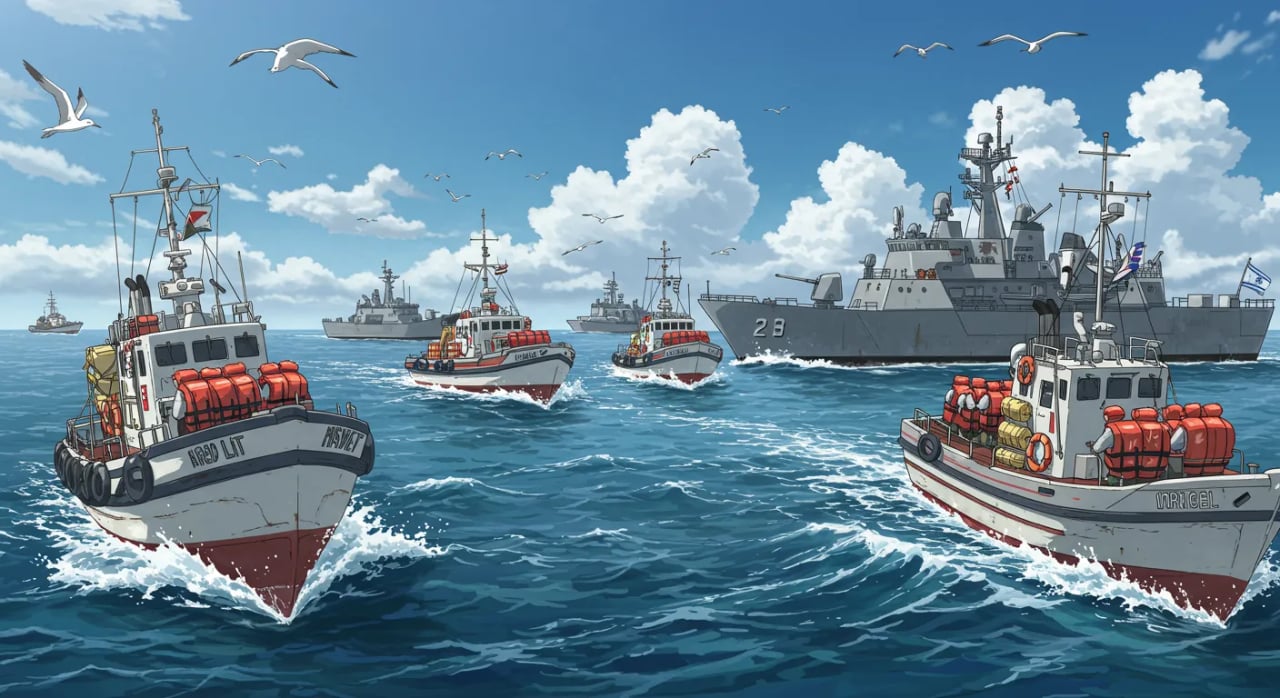



The sea was always my escape—so when I read about the Madleen, a boat braving the Mediterranean to bring urgent supplies into besieged Gaza, I couldn’t help but picture myself on board. Just imagine: radio static, anxiety buzzing, and the weight of thousands of lives packed into those cargo holds. This isn’t just another headline—it's the latest chapter in a story of desperate blockade runners, diplomatic stand-offs, and an unfolding famine threatening millions. Let’s wade into the currents of the Gaza humanitarian crisis and see what really happens when activism collides with armed enforcement at sea.
From Streets to Seas: The Rise of the Freedom Flotilla
When you hear about the Freedom Flotilla, you’re witnessing a movement that has shifted from street protests to risky sea voyages, all in the name of breaking the Gaza Blockade. Since 2007, when Israel and Egypt imposed strict controls after Hamas took power in Gaza, activists have been searching for new ways to deliver humanitarian aid and draw global attention to the crisis. The Freedom Flotilla Coalition, a non-governmental group, has become a symbol of this effort, sending ships loaded with supplies and hope toward a territory now facing catastrophic hunger.
This year, the mission took on new urgency and visibility. On June 1, 2025, the vessel Madleen departed Sicily with 12 activists on board. Among them was climate campaigner Greta Thunberg, whose presence instantly drew international headlines and fierce criticism. As the boat sailed, Israeli officials issued repeated warnings, vowing to block any attempt to breach the naval blockade. Defense Minister Israel Katz’s statement was blunt:
“To the antisemitic Greta and her fellow Hamas propagandists — I will say this clearly: You should turn back, because you will not make it to Gaza.”
The Freedom Flotilla’s mission is clear: break the blockade, deliver aid, and shine a spotlight on what many describe as a deepening humanitarian catastrophe. Research shows that the blockade has pushed Gaza’s 2.1 million residents to the brink, with aid agencies warning of famine and child malnutrition rates soaring. Despite these warnings, Israel maintains the blockade is necessary to prevent weapons from reaching Hamas, a stance that has only intensified since the escalation of the Israel Gaza conflict in 2023.
For the activists on board, the risks are real and growing. Just last month, another Freedom Flotilla vessel was attacked by two drones in international waters off Malta, an incident the group blames on Israeli forces. The front section of the ship was damaged, a stark reminder of the dangers facing those who challenge the blockade. On this latest voyage, activists reported their tracking and communication devices were jammed as they neared Gaza, leaving them isolated and vulnerable.
If you imagine yourself on the Madleen, you might wonder: would fear or principle drive you forward? The answer isn’t simple. For some, the principle of delivering humanitarian aid outweighs the threat of violence or arrest. For others, the reality of drone attacks and blocked communications might be enough to turn back. Yet, the Freedom Flotilla persists, undeterred by political pressure or military action. Their determination reflects a broader call for international attention and action as Gaza’s crisis deepens.
Seventeen years since the blockade began, the Freedom Flotilla’s journey from streets to seas continues, each mission a test of resolve—and a challenge to the world’s conscience.

Blockade Chronicles: Why Gaza Remains Cut Off
The Gaza Blockade has become one of the most enduring and controversial features of the Israel Gaza Conflict. Since 2007, when Hamas seized power in Gaza, both Israel and Egypt have enforced a strict blockade, citing the need to prevent Hamas arms imports. But over the years, the blockade has grown far beyond weapons control, shaping every aspect of daily life for the 2 million Palestinians trapped inside the territory.
A Hardened Blockade Since 2007
Looking back, the Gaza Blockade began as a response to Hamas taking control. Israel and Egypt quickly closed borders, restricting movement and the flow of goods. The stated goal: stop weapons from reaching Hamas. But as the years passed, the blockade tightened. Each spike in violence—like the October 7, 2023 attacks—brought new layers of restriction. In March 2025, Israel imposed a total blockade, halting all imports, including food, fuel, and medicine. Research shows this move has pushed Gaza’s humanitarian crisis to new extremes, with 90% of the population now displaced and aid agencies warning of famine.
Security, Politics, and Power
Officials in Israel argue the blockade is a necessary security measure. Defense Minister Israel Katz recently stated, “Israel wouldn’t allow anyone to break its naval blockade of the Palestinian territory, which he said was aimed at preventing Hamas from importing arms.” The Hamas Arms Blockade, as it’s often called, is designed to keep weapons out—but critics say it’s also about exerting political and economic pressure. Egypt’s role is less publicized but just as critical, with the Rafah crossing often closed or tightly controlled.
Defense or Deprivation?
Where does security end and deprivation begin? That question is at the heart of the debate. Human rights groups and UN experts have repeatedly accused Israel of collective punishment, pointing to the sweeping restrictions on food, fuel, and medical supplies. The blockade has left Gaza’s population almost entirely dependent on international aid. Yet, as recent events show, even that aid faces obstacles. When the Freedom Flotilla Coalition, carrying activists like Greta Thunberg, attempted to deliver supplies by sea, Israel vowed to block the vessel. “You should turn back, because you will not make it to Gaza,” Katz declared, underscoring the hard line.
Life Under Extraordinary Restrictions
For ordinary Gazans, the blockade is not just a political issue—it’s a daily struggle. Picture a child swapping colored marbles for a piece of bread. This is not a metaphor, but a glimpse into the barter economy that has emerged as goods grow scarce. Streets once bustling with commerce now see residents unloading UN food trucks, desperate for basic supplies. Aid workers describe feeling helpless as the risk of famine grows and food insecurity reaches catastrophic levels.
The Gaza Blockade, hardened by years of conflict and policy, remains a defining—and deeply divisive—element of the Israel Gaza Conflict, shaping the fate of millions and fueling a humanitarian crisis with no clear end in sight.
A Humanitarian Crisis Unfolds: From UN Warnings to Starvation Stats
If you’ve been following the Gaza crisis, you know the numbers are staggering. The humanitarian situation is spiraling, and the warnings from UN experts, the World Health Organization, and aid workers have grown impossible to ignore. Gaza’s population—2.1 million people—is facing a catastrophe, with three-quarters now at emergency or catastrophic food insecurity. The Gaza Humanitarian crisis is no longer a looming threat; it’s a daily reality.
Let’s start with the most urgent signals. UN Experts recently stated,
“The risk of famine in Gaza is increasing due to the blockade, with nearly half a million people facing catastrophic hunger.”This is not just rhetoric. Since March 2025, after a 2.5-month total blockade, Israel has allowed only a faint trickle of humanitarian aid into Gaza. For many, it’s simply too little, too late. Aid workers on the ground say they feel helpless as food, medicine, and fuel remain scarce. The blockade, according to the UN, is a violation of international law—one that’s pushing Gaza deeper into starvation.
The statistics are grim. More than 54,000 Palestinians have been killed since the escalation began, the Gaza Health Ministry reports, with women and children making up the majority of the dead. Acute child malnutrition has soared by 80% as of March 2025. At least 57 children have reportedly died from malnutrition since the blockade re-tightened. Half a million people are now facing catastrophic hunger, and the numbers keep climbing.
The crisis isn’t just about numbers—it’s about lives interrupted and futures lost. Aid convoys, when they do arrive, are often mobbed by desperate families. UN food trucks have been stopped and unloaded by civilians as Israeli attacks continue. The situation is so dire that international agencies warn of an impending famine unless the blockade is lifted and military operations cease.
Amid this, the world watched as the Madleen, an aid boat carrying climate activist Greta Thunberg and others, attempted to break the naval blockade. Their mission: deliver humanitarian aid and draw attention to the Gaza Famine Risk. But Israeli Defense Minister Israel Katz was blunt: “You should turn back, because you will not make it to Gaza.” The Madleen’s journey was fraught with obstacles—reports of jamming devices, drone attacks on previous flotillas, and the constant threat of interception by armed patrol boats. The wild card moment: would the boat be greeted by cheering families or by force?
Research shows that the blockade, imposed by Israel and Egypt since 2007, has been described by critics as collective punishment. With 90% of Gaza’s population displaced and almost entirely dependent on humanitarian aid, the Gaza Starvation crisis is intensifying. International law experts and aid organizations continue to demand safe passage for humanitarian aid, but so far, the blockade holds.
Political Ripples: International Law, Flotilla Drama, and the War of Words
When you look at the Israel Gaza conflict, the political stakes stretch far beyond the shores of the Mediterranean. Israel’s blockade of Gaza, enforced by sea and land, is defended by officials as a matter of national security. Defense Minister Israel Katz, speaking in June 2025, made it clear: “Israel wouldn’t allow anyone to break its naval blockade of the Palestinian territory, which he said was aimed at preventing Hamas from importing arms.” The Israeli government’s message is blunt—no exceptions, not even for high-profile activists like Greta Thunberg or members of the European Parliament.
But the blockade isn’t just a local security measure. It’s a flashpoint in a much larger debate about international law and humanitarian aid. As the Freedom Flotilla Coalition set sail from Sicily, carrying Thunberg and 11 other activists, the world watched. Their mission: break the blockade, deliver humanitarian aid, and draw attention to what many call a deepening humanitarian crisis in Gaza. The flotilla’s journey was anything but smooth—reports of jamming devices and drone attacks on previous aid ships only heightened the drama.
International pressure is mounting. UN experts and human rights organizations have repeatedly called for safe passage for humanitarian aid, arguing that blocking such shipments violates international law. As the UN Human Rights Council put it,
“UN experts demand safe passage for humanitarian aid, citing violations of international law by Israel.”The rhetoric is fierce, and so is the legal wrangling. In a remarkable move, the International Criminal Court (ICC) issued a warrant for Israeli Prime Minister Benjamin Netanyahu in 2025, citing war crimes related to the blockade and the resulting starvation in Gaza.
You see the battle lines drawn not just in courtrooms, but across social media and diplomatic channels. Israeli officials accuse flotilla participants and their supporters of spreading propaganda and even antisemitism. Katz’s statement to Thunberg and her fellow activists was pointed: “To the antisemitic Greta and her fellow Hamas propagandists — I will say this clearly: You should turn back, because you will not make it to Gaza.” On the other side, activists and international observers argue that the blockade amounts to collective punishment, with catastrophic consequences for Gaza’s 2.1 million residents—most of whom are now almost entirely dependent on humanitarian aid.
The legal and political drama doesn’t end at the water’s edge. When France’s Rima Hassan, a member of the European Parliament, joined the flotilla, Israel barred her entry, citing her opposition to Israeli policies. Meanwhile, the ICC’s warrant for Netanyahu raises the stakes even higher. Could international law actually bring leaders to account? That question lingers, as the war of words rages on and the humanitarian crisis deepens.
Research shows that these international law concerns and criminal proceedings have intensified global scrutiny of Israel’s blockade. The Freedom Flotilla, far from being just another protest, has become a symbol of the broader debate over humanitarian aid, sovereignty, and accountability in the Israeli military campaign against Gaza.
Humanity at the Helm: Stories of Resilience, Desperation, and Unanswered Questions
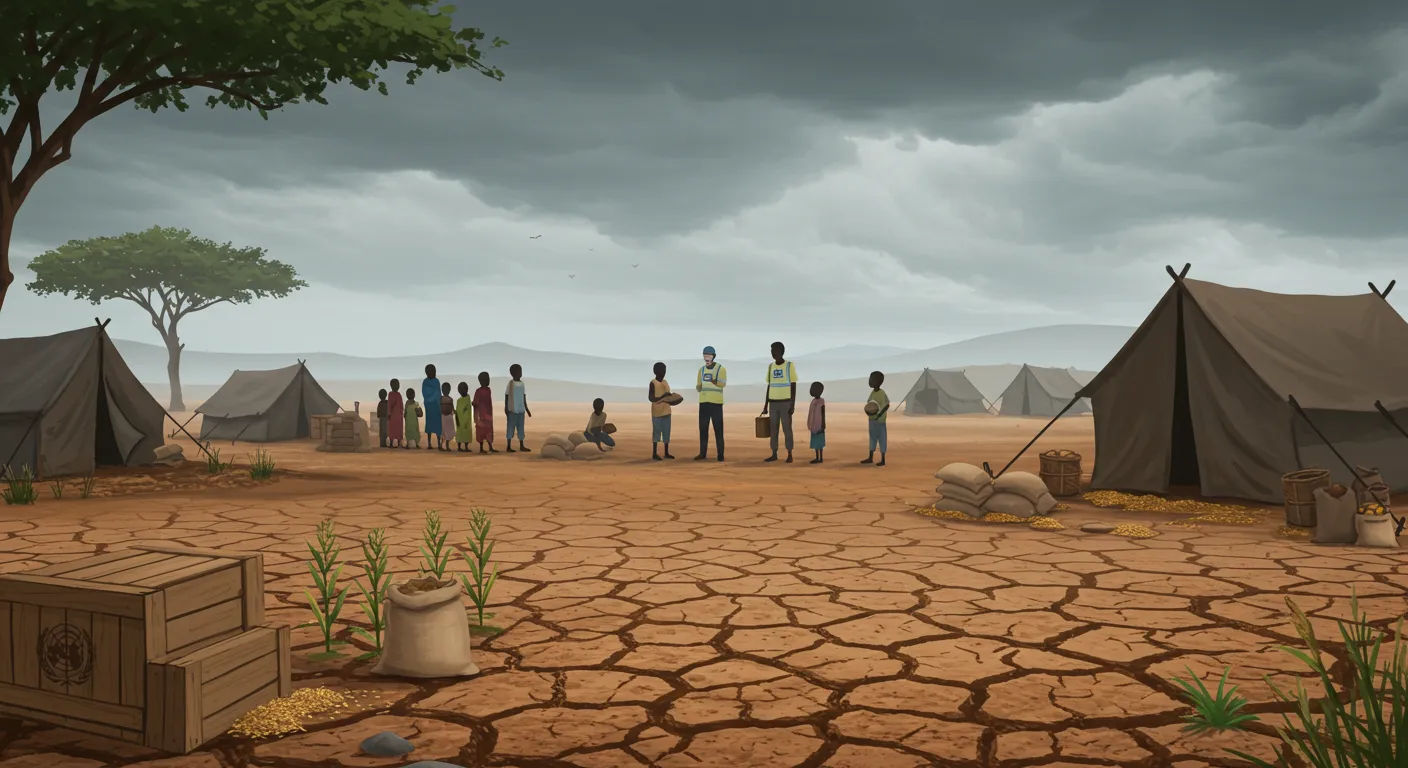
In the heart of the Gaza Crisis, you see humanity tested at every turn. For ordinary Gaza residents, daily life has become a relentless struggle for survival. With 90% of the population displaced as of June 2025, families are forced to rely almost entirely on humanitarian aid—when it arrives at all. The images are stark: desperate crowds gathering around battered UN food trucks, risking their lives to unload sacks of flour and canned goods while the threat of airstrikes looms overhead. Aid distributions reach only a fraction of those in need, and yet, local ingenuity and a culture of sharing help some families get by, if only barely.
The blockade, enforced by Israel and Egypt since 2007 and tightened to a total closure earlier this year, has left Gaza’s 2.1 million residents on the brink. As the World Health Organization warns, “The entire 2.1 million population of Gaza is facing prolonged food shortages, with three-quarters at 'Emergency' or 'Catastrophic' levels of food insecurity.” The risk of Gaza starvation grows by the day, and aid workers—many of whom have spent months in the field—report feeling helpless. Still, they return each morning, driven by a sense of duty and the knowledge that their presence, however limited, means hope for someone.
You might wonder what keeps people going in the face of such overwhelming odds. The answer is not simple. For many, it’s the bonds of family and community, the refusal to give in to despair, and the small acts of kindness that punctuate each day. For aid workers, it’s the knowledge that neutrality is a luxury they cannot afford. The Gaza Humanitarian crisis leaves little room for easy answers, and even less for indifference.
Perhaps you’ve felt something similar, if only in a distant echo. Volunteering at a food bank after a hurricane, you might have sensed the same mix of powerlessness and resolve. The stakes are different, the risks far less severe, but the emotional landscape—confusion, compassion, contradiction—feels universal. In Gaza, these feelings are amplified by the constant threat of violence and the ever-present uncertainty about tomorrow.
As the world watches, the question remains: what will move you to act, or to look away? The humanitarian aid blockade and the ongoing Gaza Crisis have frayed the bonds of empathy, tested by distance, disinformation, and fatigue. Yet, the stories of resilience and desperation coming out of Gaza challenge you to reconsider where you stand. In a crisis that leaves no one untouched, the line between witness and participant blurs. The unanswered questions linger, demanding not just attention, but action.
